
Buying a Crop Spraying Drone vs Traditional Crop Spraying Methods
Farming is a delicate balance between nurturing crops and protecting them from constant threats. Pests, diseases, weeds and nutrient deficiencies can all wipe out months of hard work if left unchecked. This is why crop spraying remains one of the most critical and non negotiable activities in modern agriculture.
Effective spraying ensures every plant receives the correct amount of chemical at the right time. When done properly, it leads to healthier crops, improved yields and better quality produce. It is not just a farming task, it is an investment protection strategy.
However, how spraying is done makes a significant difference. Traditional manual spraying methods and modern drone spraying technologies produce very different results in terms of efficiency, cost, safety and long term sustainability.
In this guide, we compare manual crop spraying vs drone crop spraying to help you make an informed decision for your farming operation.
Key Takeaways
Manual spraying is low cost and suitable for very small farms but is slow, inconsistent and exposes operators to chemicals
Drone spraying has a higher initial cost but delivers long term savings on labour, water and chemicals
Crop spraying drones are faster, more precise and significantly safer
The best spraying method depends on farm size, terrain and budget
Drone spraying services allow farmers to access the technology without a large upfront investment
Traditional Crop Spraying Methods Explained
Manual Spraying
Manual spraying is commonly done using knapsack sprayers operated by hand, battery or small petrol engines. This method is affordable and widely used but is labour intensive and slow.
Operators are required to walk through crops carrying heavy equipment, often resulting in:
Operator fatigue
Inconsistent coverage
Direct chemical exposure
In dense or tall crops, manual spraying can be physically dangerous and inefficient.
Tractor Mounted Sprayers
Tractor based boom sprayers improve efficiency on large, flat fields. They allow wider coverage in less time but are limited by terrain and crop spacing.
Tractors can:
Compact soil
Damage crops when fields are wet
Struggle in uneven or sloped terrain
Certain crops become impossible to spray once they reach full height, leaving sections untreated.
Why Crop Spraying Drones Are Emerging as a Better Alternative
Agricultural drones are rapidly gaining traction due to their ability to overcome many of the limitations of traditional spraying methods.
Unmatched Efficiency
Crop spraying drones can cover large areas in a fraction of the time required by manual spraying. This speed is critical during pest outbreaks or disease pressure when timing is everything.
Drones allow farmers to:
Spray more hectares per hour
Respond faster to crop threats
Reduce downtime caused by wet fields
Enhanced Precision and Coverage
Modern crop spraying drones fly at low altitude and use precision nozzles combined with downwash from propellers to push spray droplets deep into the crop canopy.
This results in:
Uniform chemical coverage
Reduced chemical waste
Improved effectiveness
The ability to reach the underside of leaves significantly improves pest and disease control.
Improved Safety
Drone spraying keeps operators away from direct contact with chemicals. Instead of walking through treated fields, operators control the drone remotely from a safe distance.
This dramatically reduces:
Chemical exposure
Health risks to workers
Long term occupational hazards
Economic Advantages
While the upfront cost of a crop spraying drone is higher, long term savings are substantial.
Drone spraying reduces:
Water usage
Chemical consumption
Labour requirements
Improved precision often leads to better yields, making drones a strong return on investment for many farming operations.
Adaptability and Soil Protection
Drones can operate in:
Uneven terrain
Steep slopes
Waterlogged fields
Because they do not touch the ground, they eliminate soil compaction caused by tractors. Healthier soil leads to better root development and improved water absorption.
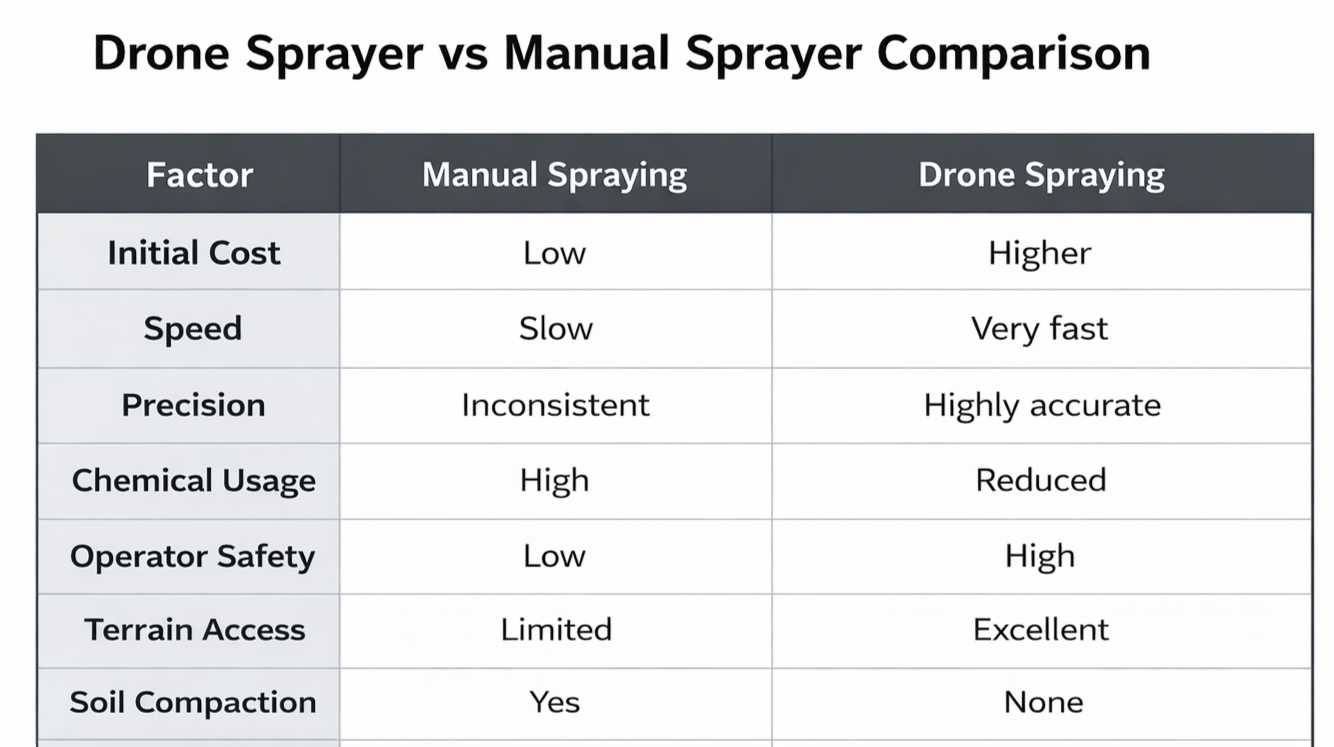
Which Spraying Method Is Best for You
The best spraying method depends on your specific farming conditions.
Farm Size
Small plots may still rely on manual spraying, while medium to large farms benefit significantly from drone efficiency.
Budget
Manual sprayers require minimal investment, but drones deliver long term cost savings. Drone spraying services allow farmers to access the technology without purchasing equipment.
Terrain
Hilly, uneven or waterlogged land is far better suited to drone spraying than tractors or manual labour.
Labour Availability
With skilled labour becoming harder to find, drones help farmers achieve more with fewer people.
Final Verdict
Manual crop spraying remains a viable option for very small scale operations, but it comes with clear limitations in speed, safety and precision.
Crop spraying drones represent a smarter, safer and more efficient solution for modern agriculture. While the initial investment is higher, the long term benefits in efficiency, cost savings and crop health make drones an increasingly essential tool.
Speak to DC Geomatics
At DC Geomatics, we specialise in agricultural drone solutions, including crop spraying drones, compliance support and operational guidance. Whether you are looking to buy a crop spraying drone or explore drone spraying services, our team can help you choose the right solution for your farm.
Contact DC Geomatics today and take the next step toward precision agriculture.